Dental Students' Exposure to Periodontal and Implant Placement Surgeries in U.S. Dental Schools
A nationwide survey of U.S. dental schools revealed that while most programs allow students to perform periodontal surgery, fewer than half offer implant placement opportunities, with significant variation in hands-on surgical exposure across institutions.

Dr. Theo Katsaros
Periodontist
Table of contents
Share
Background & context
Dental students in the United States and Canada receive extensive didactic training alongside significant direct patient care hours, but the depth of their exposure to surgical procedures varies considerably across institutions.
While there are set minimum accreditation standards, there is substantial flexibility in how programs fulfill those requirements, meaning two graduates from different schools can enter practice with dramatically different surgical experience.
The last national assessment of dental students' exposure to surgical periodontal procedures dated to 1991. In the intervening three decades, the landscape of dental education had shifted considerably: new schools opened with non-traditional curricular structures, specialty residency programs expanded, and dental implantology grew from a niche surgical discipline into a routine component of dental practice.
This study set out to establish a current nationwide picture of surgical exposure in periodontics and implant placement, and to identify institutional factors that influence those opportunities.
Key findings
Periodontal surgery exposure
Nearly all participating institutions (97%) allowed dental students to perform periodontal surgical procedures, and 100% allowed students to assist in surgeries performed by residents or faculty.
However, allowing and requiring are very different things. Only 6.1% of programs required students to perform periodontal surgery, compared to 66% in the 1991 survey. The gap between permission and participation was also stark: despite near-universal permission, only 26.4% of the average dental class actually performed a periodontal surgical procedure.
Metric | Finding |
|---|---|
Schools allowing students to perform perio surgery | 97% |
Schools requiring students to perform perio surgery | 6.1% |
Average % of dental class that performed perio surgery | 26.4% (±31%) |
Most commonly performed surgical procedure | Crown lengthening (84.8% of schools) |
Other reported procedures | Free gingival grafts, flap surgery, ridge preservation, frenectomy, gingivectomy, open flap debridement |
Implant placement surgery exposure
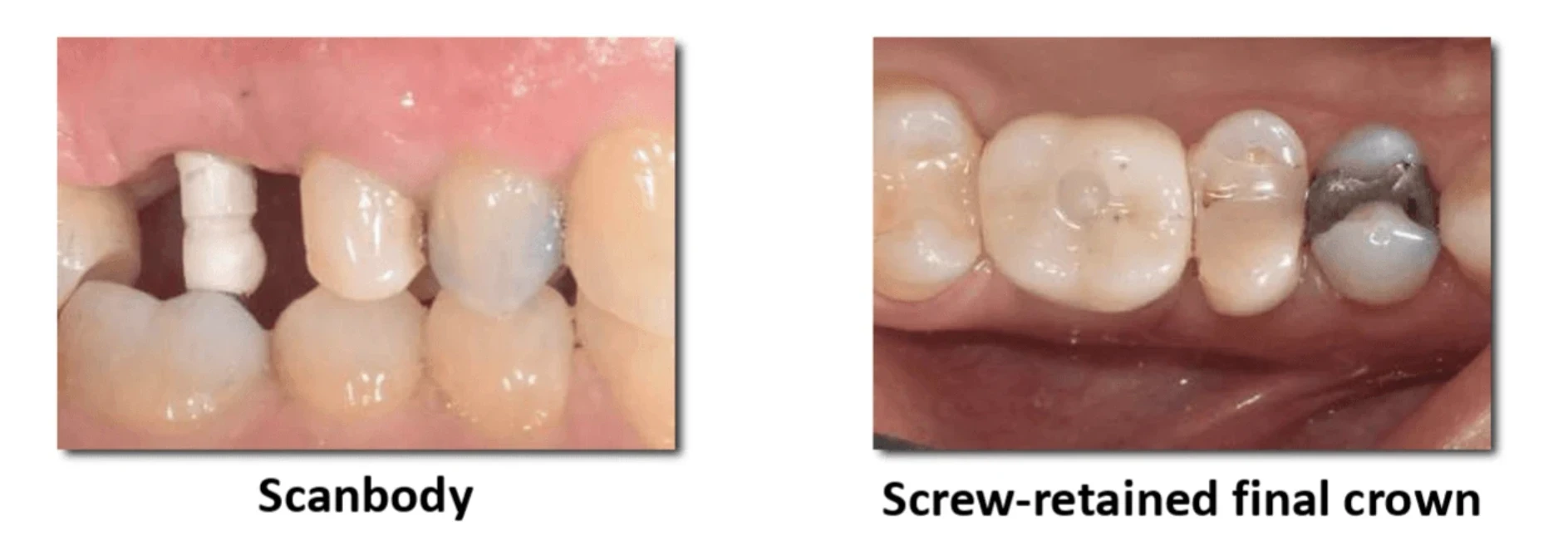
Implant placement experience was far less common. Fewer than half of participating institutions allowed students to place implants, and not a single institution required it as a graduation requirement.
On average, only 15.2% of the dental class placed an implant during their predoctoral education — and the median was just 1.5%, reflecting that in most institutions, implant placement remained the experience of a very small minority of students.
Metric | Finding |
|---|---|
Schools allowing students to place implants | 45.5% |
Schools requiring students to place implants | 0% |
Average % of dental class that placed implants | 15.2% (mean) / 1.5% (median) |
Schools with periodontics residency program | 72.7% |
Schools with periodontics faculty practice | 75.8% |
Factors influencing implant placement experience
Correlation analysis identified two statistically significant relationships with implant placement rates, both involving the periodontics residency program.
Institutions with a periodontics residency program had a significantly lower proportion of dental students placing implants, most likely because patients are referred to residents rather than predoctoral students. However, among institutions that had a residency program, a larger program size was positively correlated with more students placing implants, suggesting that larger programs in major metropolitan areas generate sufficient patient volume to accommodate both residents and students.
No statistically significant relationship was found between implant placement rates and class size, faculty practice presence or size, or the existence of a student interest group.
The gap between permission and participation
The most striking finding in this study is not the institutional policies; it's the divergence between what schools allow and what students actually do.
Despite 97% of schools permitting periodontal surgery and 45.5% permitting implant placement, only 26.4% and 15.2% of students respectively took part. Crowded curricula, faculty time constraints, and limited patient flow to predoctoral clinics appear to be suppressing participation well below permitted levels.
Implications for dental education
The study highlights a meaningful disconnect between the growing role of implant dentistry in clinical practice and the surgical training most dental graduates receive. A separate survey of graduating dental students found that only 52.6% felt prepared in implant dentistry, compared to 89.9% for periodontics; consistent with the surgical exposure disparity documented here.
Research shows that students who are exposed to surgical procedures in a specialty are more likely to consider pursuing that specialty in postgraduate training. Limiting surgical exposure therefore has downstream consequences not just for clinical preparedness, but for workforce pipeline into specialties like periodontics.
The shift from gingivectomy (the most common student procedure in 1991) to crown lengthening (the most common in this survey) also reflects changes in practice patterns and the declining prevalence of advanced periodontitis in younger patient populations, an encouraging public health signal, though one that further narrows the pool of appropriate surgical cases for student participation.