Periodontal disease treatment in Toronto
Healthy gums are essential for a healthy mouth. Located in Toronto, Bloor-Yorkville Periodontics, offers expert care to treat periodontal (gum) disease. Since this condition is the leading cause of tooth loss in adults, we prioritize early detection and treatment to help preserve your oral health.
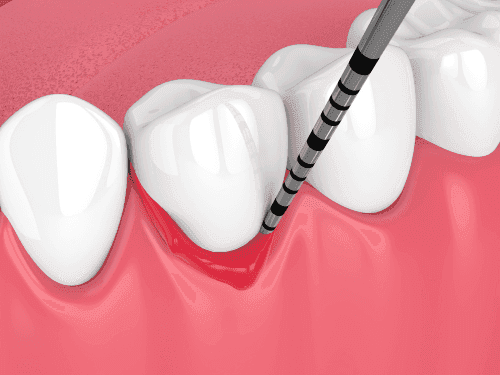
What is periodontal disease?
Periodontal disease, commonly known as gum disease, is a bacterial infection that affects the gums and the bone that holds your teeth in place.
It begins when plaque builds up along and below the gumline and is not fully removed through brushing and flossing. Over time, the bacteria in that plaque irritate and infect the surrounding tissue, causing the gums to pull away from the teeth and the supporting bone to break down. If left untreated, this process leads to loose teeth and eventual tooth loss.
Gum disease does not go away on its own, and the damage it causes to bone and tissue cannot be fully reversed. Catching it early makes a significant difference, the sooner it is treated, the more of your natural teeth and bone can be preserved.
Common warning signs include:
Gums that bleed when you brush or floss
Gums that look red, feel swollen, or are tender to the touch
Bad breath or an unpleasant taste in your mouth that does not go away
Gums that are shrinking or pulling away from your teeth
Teeth that feel loose or have shifted position
It is important to know that gum disease can progress without causing noticeable pain. Many patients are unaware they have it until it has already caused significant damage.
Regular check-ups are the most reliable way to catch gum disease before it becomes a serious problem.
How is periodontal disease diagnosed?
At Bloor-Yorkville Periodontics, we carry out a thorough examination to get a clear picture of your gum health.
Here is what that involves:
Examining your gums: We look closely at your gum tissue for signs of infection, including redness, swelling, recession, and bleeding.
Measuring gum pockets: We use a small, gentle instrument called a periodontal probe to measure the depth of the space between your gums and teeth. Deeper pockets are a sign that gum disease has taken hold below the gumline.
Taking X-rays: Digital X-rays allow us to see the bone around your teeth and identify any areas where bone loss has occurred, something that cannot be seen during a visual examination alone.
Reviewing your health history: Certain health conditions and lifestyle factors, such as diabetes, smoking, or a family history of gum disease, can increase your risk and affect how gum disease responds to treatment. We take these into account when assessing your situation.
Once we have completed our assessment, we will explain exactly what we found, what it means for your oral health, and what treatment options are available to you.
If gum disease is present, we will put together a treatment plan tailored to your specific needs.
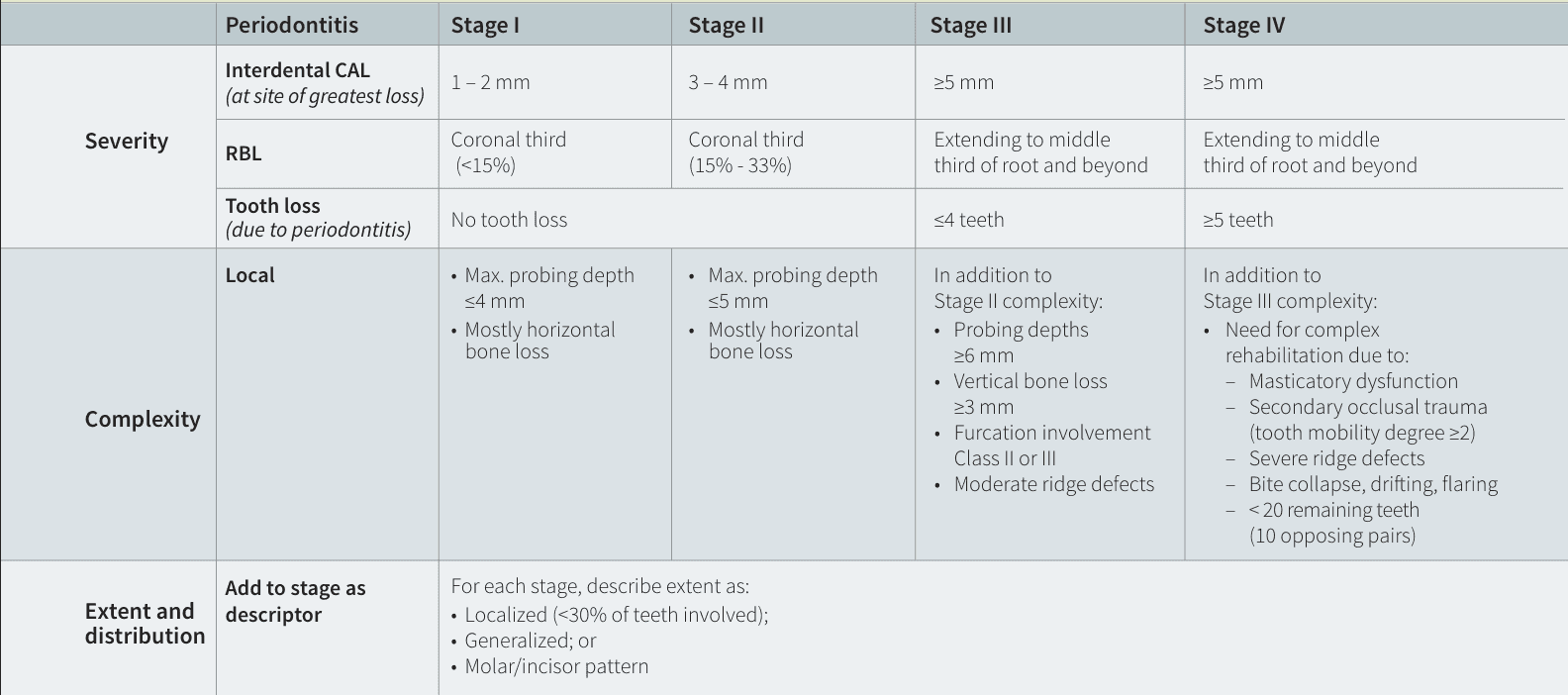
Periodontitis: Staging — How we assess the severity of your gum disease
Not all gum disease is the same. The damage it causes can range from mild to severe, and understanding exactly where you are in that range is an important part of putting together the right treatment plan for you.
To determine how advanced your gum disease is, we look at several things:
How much attachment has been lost: The connection between your gums and the roots of your teeth is called attachment. When gum disease is present, this connection breaks down over time. We measure how much of that attachment has been lost, as this gives us a reliable picture of how far the disease has progressed.
Bone loss: If attachment loss is difficult to measure directly, we use digital X-rays to assess how much of the bone supporting your teeth has been affected. Bone loss is one of the clearest indicators of disease severity.
Tooth loss caused by gum disease: If you have already lost teeth as a result of gum disease, this is taken into account when we assess the overall severity of your condition.
Factors that make your case more complex: Certain circumstances such as how deep your gum pockets are, how much your teeth have shifted, or how your body has responded to the disease can indicate that your condition is more advanced or more difficult to treat.
Taken together, these findings allow us to accurately stage your gum disease and ensure that your treatment plan is matched to the true extent of what is happening below the gumline.
Periodontitis: Grading — How we assess the rate and risk of your gum disease
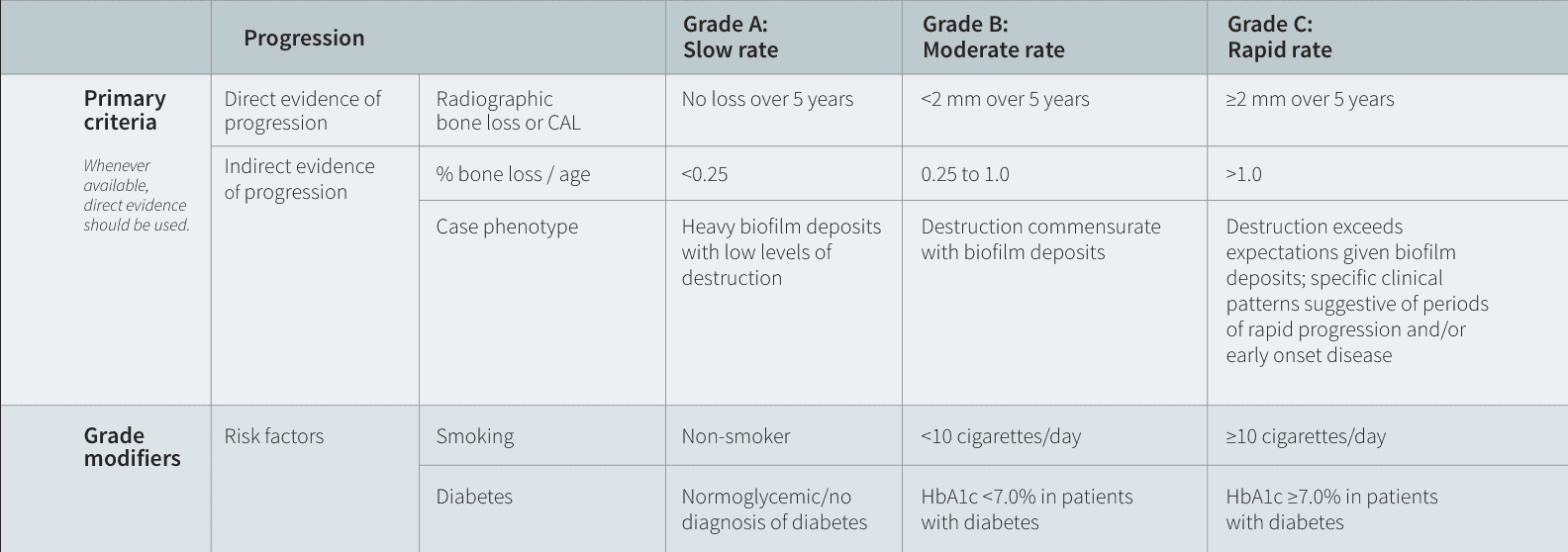
Staging tells us how much damage has already occurred. Grading takes things a step further, it helps us understand how quickly your gum disease is likely to progress, how well you may respond to treatment, and whether it could be connected to or affecting your broader health.
To determine your grade, we start by assuming a moderate level of risk and then look for evidence that points in either direction:
Grade A (Low risk): Your gum disease appears to be progressing slowly, and there are no significant factors suggesting it will worsen quickly or be as difficult to treat.
Grade B (Moderate risk): This is the starting point for most patients. Your disease is progressing at a moderate rate, and your response to treatment is expected to be reasonable with appropriate care.
Grade C (High risk): There are signs that your gum disease is advancing more aggressively than expected, may be harder to control, or is being influenced by factors such as smoking or poorly managed diabetes that increase the likelihood of further damage.
Understanding your grade helps us go beyond simply treating the damage that is already present. It allows us to anticipate how your gum disease is likely to behave over time, tailor your treatment plan accordingly, and identify any underlying health factors that may need to be addressed alongside your periodontal care.
Referenced from the American Academy of Periodontology
How do we treat periodontal disease (gum disease)?
At Bloor-Yorkville Periodontics, we tailor every treatment plan to the individual patient. The right approach depends on how far your gum disease has progressed, how your body has responded, and what your long-term oral health goals are. After a thorough examination, we will explain our findings and recommend the most appropriate course of treatment for your specific situation.
Non-surgical treatment options
For many patients, particularly those in the earlier stages of gum disease, effective treatment does not require surgery. Our non-surgical options include:
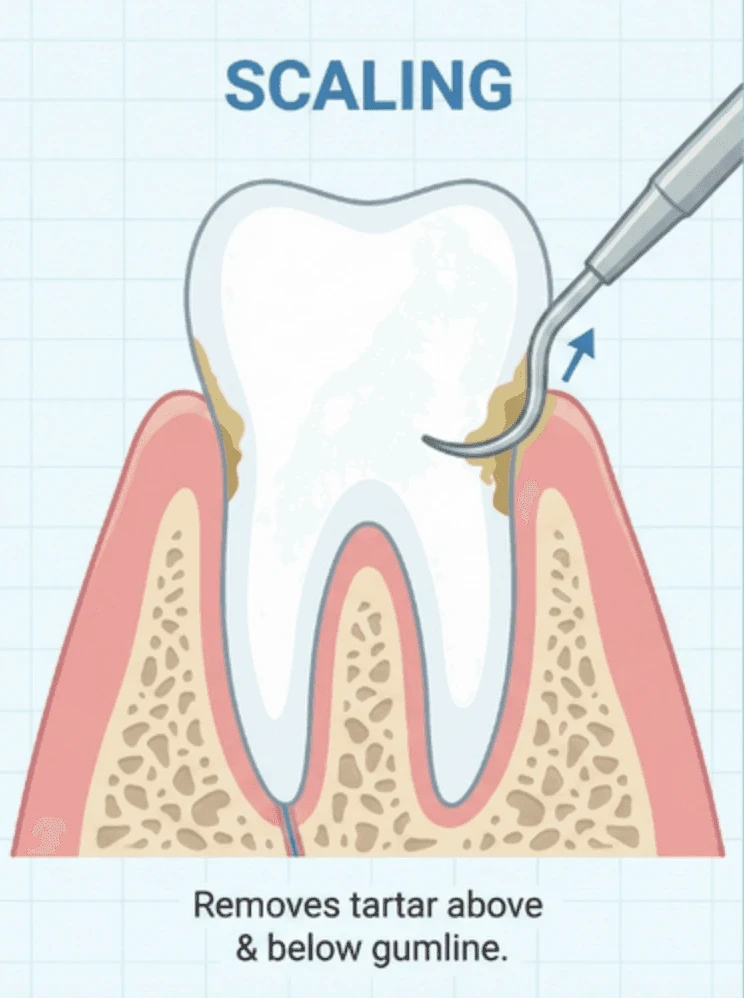
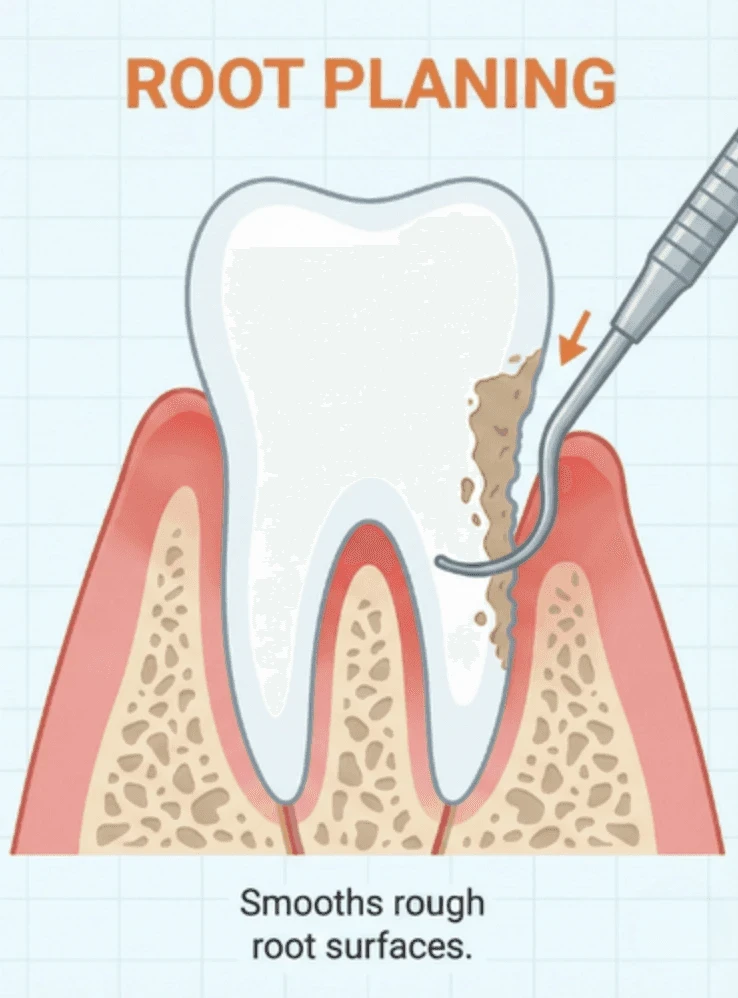
Dental scaling and root planing: A deep cleaning procedure that removes bacterial deposits and hardened tartar from below the gumline and smooths the root surfaces of the teeth. This clears the source of infection and gives the gum tissue the conditions it needs to heal and reattach to the tooth roots.
Antibiotic therapy: In some cases, we may recommend antibiotics to help eliminate the bacteria driving your infection. This may involve a topical antibiotic applied directly to the gum pockets, a medicated mouth rinse, or a course of oral antibiotics, depending on the nature and extent of the infection.
Oral hygiene instruction: Effective home care is an essential part of managing gum disease. We will show you the most effective techniques for brushing and flossing, and provide guidance on any additional tools or products that can help you keep your gums healthy between appointments.
Surgical treatment options
When gum disease has advanced to a stage where non-surgical treatment alone is not sufficient, surgery may be necessary to fully address the damage and protect the structures supporting your teeth. Our surgical options include:
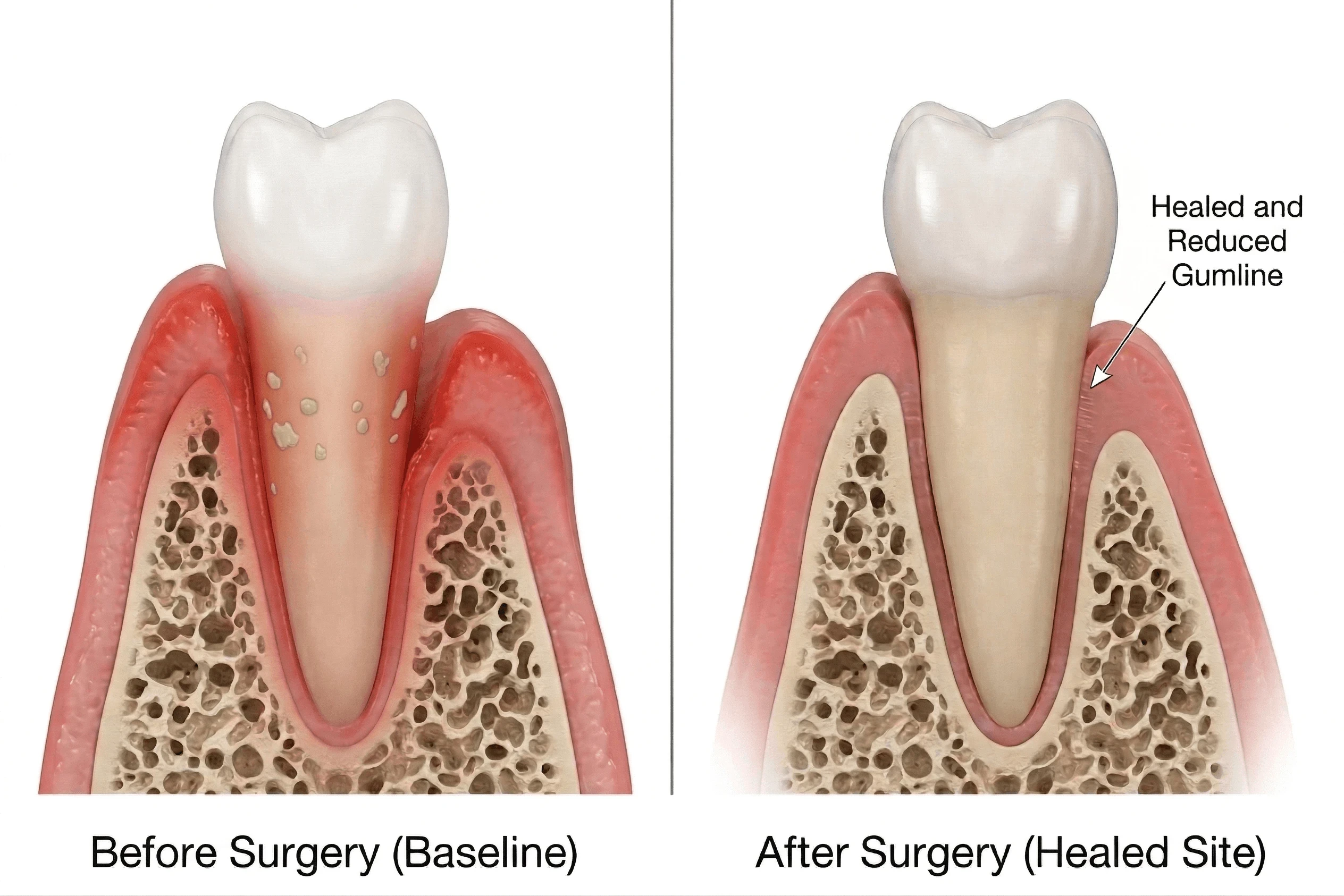
Pocket reduction surgery: When periodontal pockets are too deep to be cleaned effectively through scaling alone, we gently fold back the gum tissue to access and remove the bacterial deposits beneath it. The tissue is then carefully repositioned and secured so that it heals closely around the tooth, reducing pocket depth and making the area easier to maintain going forward.
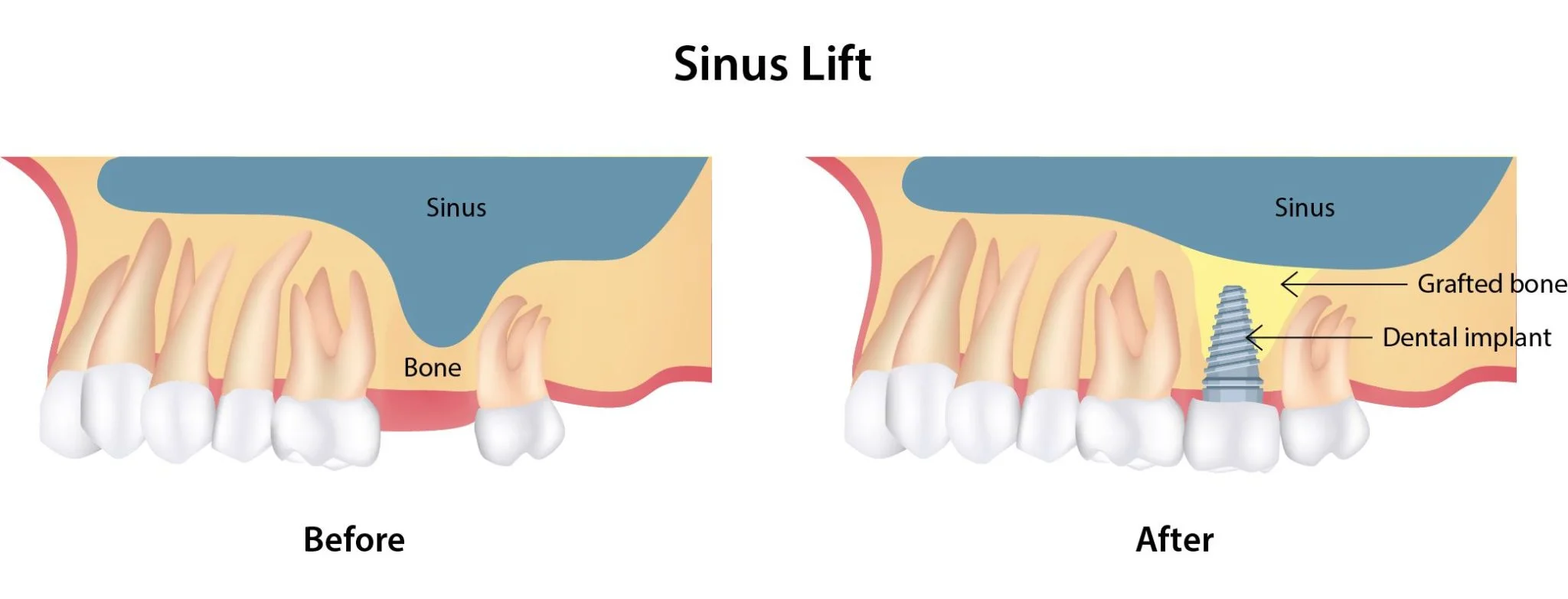
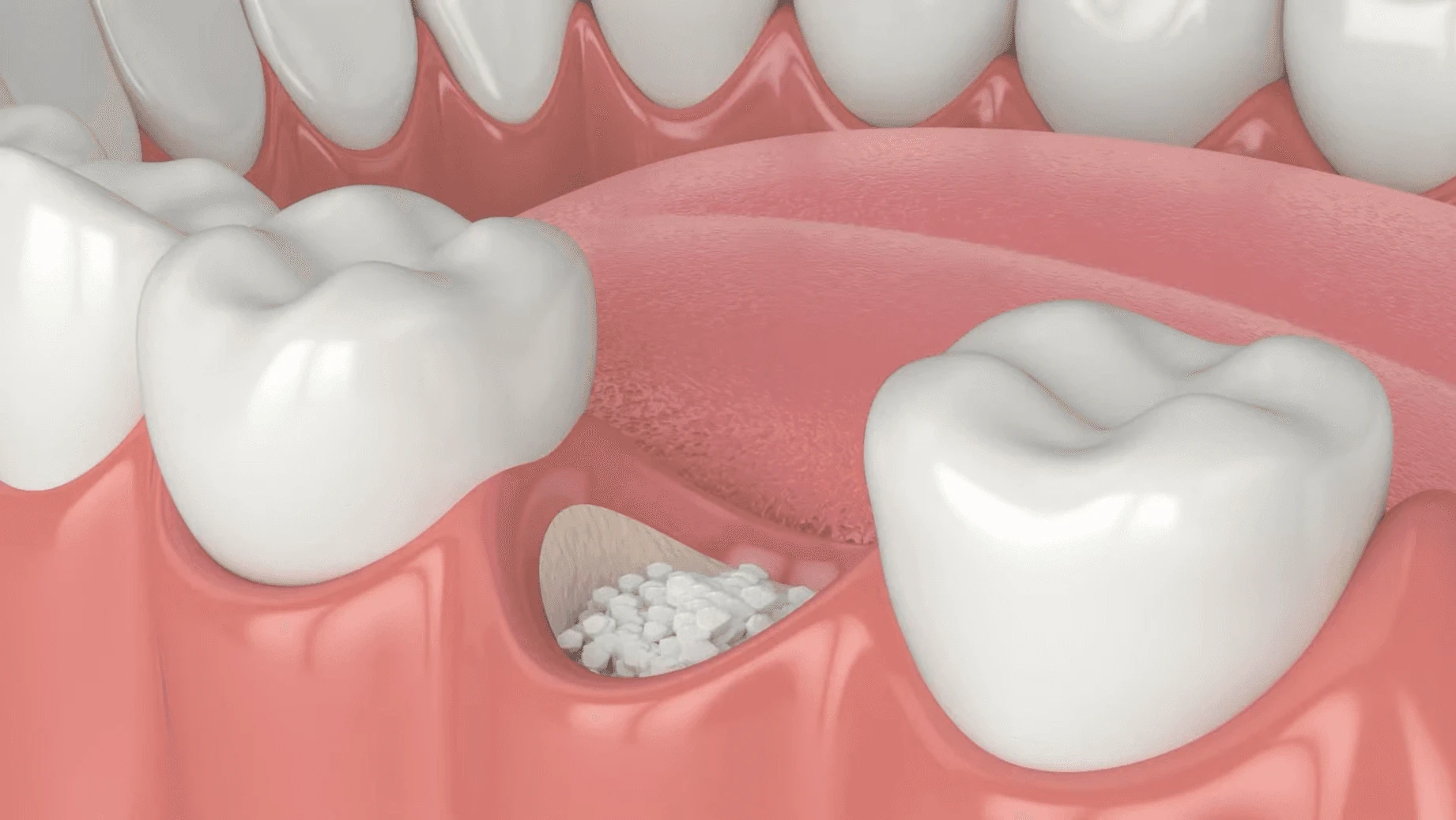
Bone grafting: When gum disease has caused significant bone loss around the teeth, a bone graft can help restore that lost structure. We place grafting material in the affected area to stimulate the regeneration of bone, helping to stabilize the teeth and rebuild the foundation that supports them.
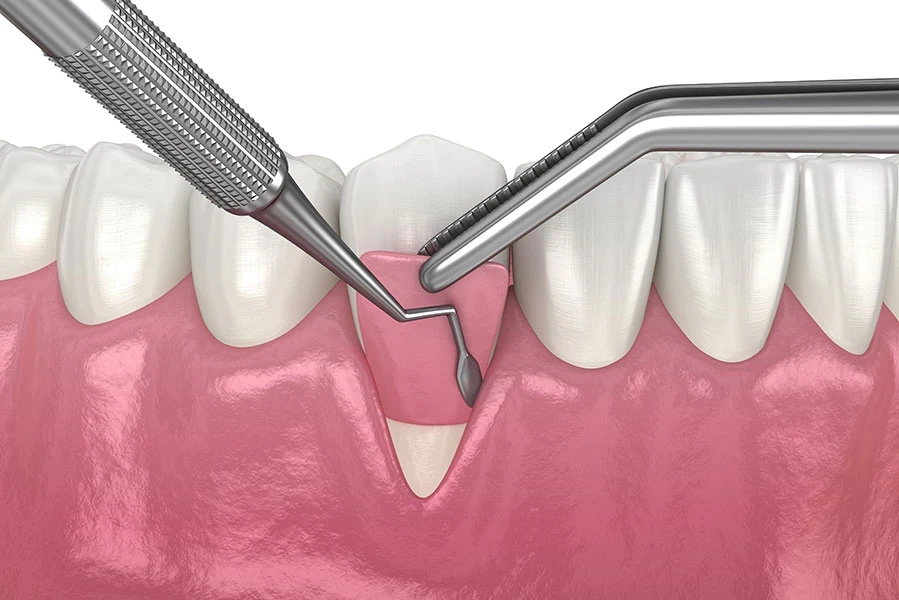
Gum grafting: When gum tissue has receded and left tooth roots exposed, a gum graft restores coverage by placing new tissue over the affected area. This protects the exposed roots from sensitivity and decay, halts further recession, and in many cases improves the overall appearance of the gumline.
Guided tissue and bone regeneration: Using advanced techniques and specialized materials, we encourage your body to regenerate lost bone and tissue in areas where disease has caused significant destruction. This approach works with your body's natural healing process to rebuild structures that would not recover on their own.
Our team at Bloor-Yorkville Periodontics will assess your gum health thoroughly and walk you through every treatment option available to you, including what each procedure involves, what to expect during recovery, and what outcomes are realistic for your situation.
Why choose Bloor-Yorkville Periodontics in Toronto for periodontal disease treatment?
At Bloor-Yorkville Periodontics, we understand that a diagnosis of gum disease can feel overwhelming.
We are committed to providing care that is thorough, personalized, and as comfortable as possible from your first appointment through to your recovery.
Personalized treatment plans: Gum disease presents differently in every patient. We take the time to fully assess your periodontal health and develop a treatment plan that is tailored to the specific stage, severity, and contributing factors of your condition, not a one-size-fits-all approach.
Specialist expertise with a gentle approach: Our team brings specialist-level knowledge to every aspect of periodontal care, from non-surgical cleaning to complex surgical procedures. We combine clinical precision with a gentle, patient-focused approach so that your treatment is both effective and as comfortable as possible.
A supportive environment: We know that gum disease treatment can feel daunting, particularly for patients who are anxious about dental procedures or who are facing surgery for the first time. Our team is here to make sure you feel informed, at ease, and supported at every stage of your treatment and recovery.
Conveniently located in Toronto: Our practice is easily accessible to patients across the city, making it straightforward to attend your treatment appointments and the follow-up visits that are an essential part of managing your long-term periodontal health.
Clear communication and transparency: Every patient deserves honest, straightforward information about their diagnosis, their treatment options, and what to expect from the process. We take the time to answer every question thoroughly and encourage you to raise any concerns at any point in your care.
Gum disease is a serious condition, but with the right treatment and ongoing care, it can be managed effectively.
If fear, uncertainty, or a previous negative dental experience has kept you from seeking help, our team in Toronto is here to support you. We will work with you to find an approach that feels manageable and gets you on the path to better gum health.