Peri-Implantitis: Risk Factors, Diagnosis and Treatment
Peri-implantitis is an inflammatory process that involves progressive bone loss and suppuration affecting the soft tissue and bone surrounding an implant.

Dr. Suzanne Caudry
Periodontist
Table of contents
Share
Peri-implantitis is an inflammatory process that involves progressive bone loss and suppuration affecting the soft tissue and bone surrounding an implant. It is associated with a bacterial infection that, unless treated, leads to the eventual loss of the implant.
What Causes Peri-implantitis?
Peri-implantitis is a result of a variety of patient and treatment conditions that collectively lead to bacterial colonization. These include those associated with the patient's presenting medical condition, the implant itself, the restoration and the maintenance of good oral health.
Major Risk Factors of Peri-implantitis
Patient Factors:
Poorly controlled diabetes
Smoking
Untreated Periodontics
Poor oral hygiene, and non-compliance with a maintenance program
Implant/Prosthesis Factors:
Uncleansable prosthesis
Excess cement
Loose/ill-fitting or broken components
How is Peri-implantitis Diagnosed?
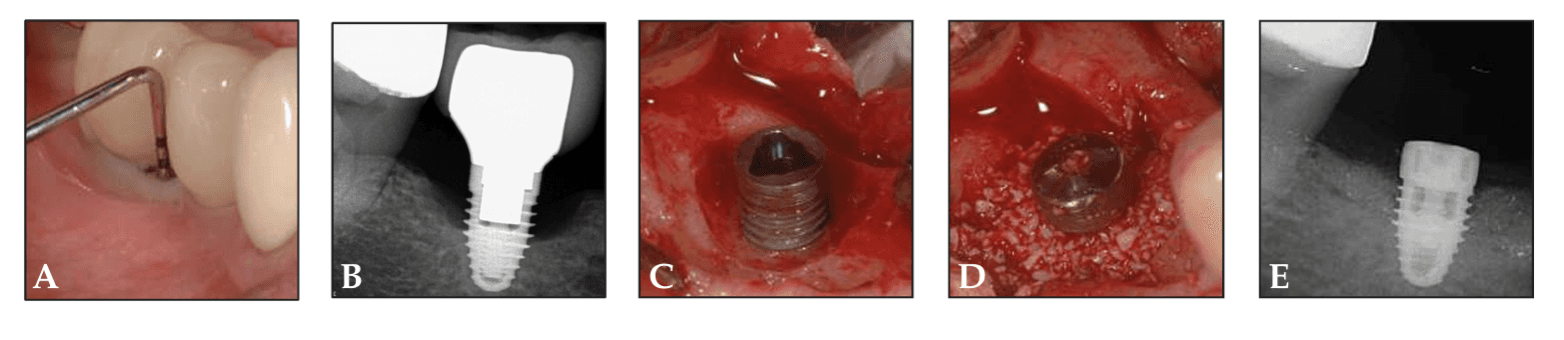
Patient symptoms may include pain, mobility of the implant and a bad taste. It is important to note that in most cases there may be no symptoms noticed by the patient. Signs observed by the dentist or hygienist include suppuration and profuse bleeding around the implant, progressive bone loss and increasing probing depths (see images A & B).
How is Peri-implantitis Treated?
Non-surgical therapy is not supported by the literature. Surgical treatment:
Open flap debridement to gain access, disinfect, and re-prepare the exposed surface of the implant.
Open flap debridement and disinfection with bone regeneration (see images C, D & E).
NB: Laser therapy has been proposed for both surgical and non-surgical therapies, however, there is no scientific evidence for its efficacy above traditional treatment.