
Dr. Theo Katsaros
Lead periodontist
Last Updated
Share
Background
What is dental scaling?
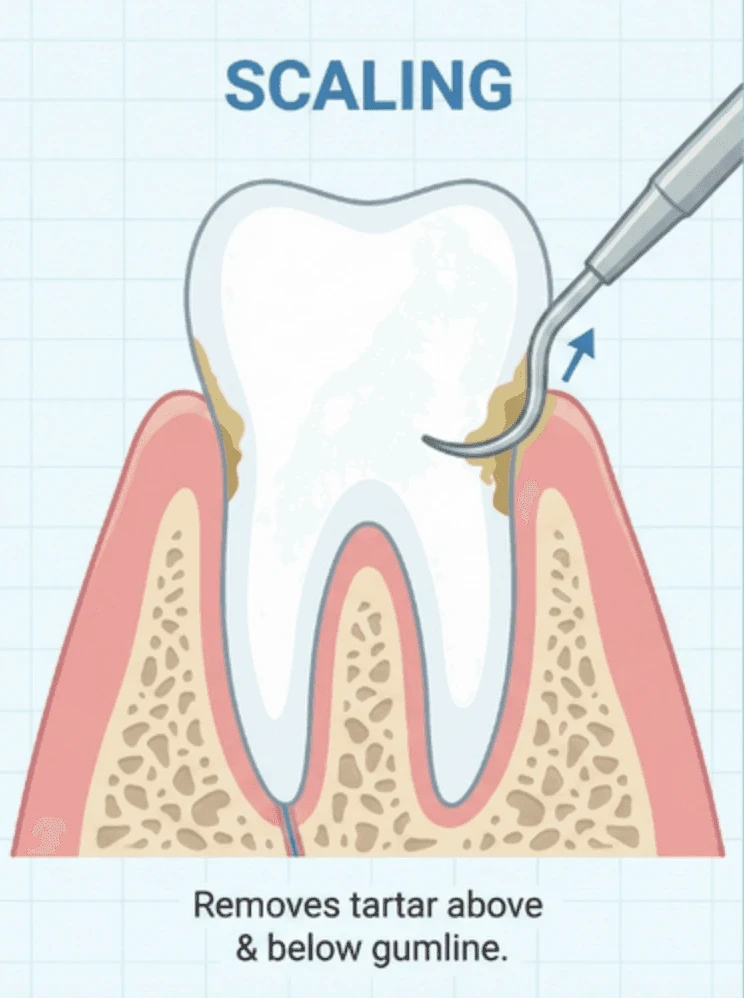
Dental scaling is a targeted clinical procedure that removes plaque, bacteria, and hardened tartar deposits from below the gumline, areas that routine brushing, flossing, and standard professional cleaning cannot adequately address. When these deposits are allowed to accumulate in the deeper structures around your teeth, they drive the progression of gum disease, cause chronic inflammation of the surrounding tissue, and over time contribute to bone loss and tooth instability.
Dental scaling interrupts that process at its source. By clearing bacterial deposits and calculus from the root surfaces and periodontal pockets, scaling reduces inflammation, resolves bleeding and sensitivity, and creates the conditions the gum tissue needs to heal and stabilize. For many patients, it is an effective treatment to stop the advancement of gum disease without surgical intervention.
When is dental scaling necessary?
The need for dental scaling is determined through a thorough clinical assessment rather than symptoms alone, many patients with significant subgingival buildup experience few obvious warning signs until the disease has already progressed. That said, the following are common indicators that scaling may be needed:
Diagnosed gingivitis or periodontitis: When gum disease has been identified, scaling is typically a core component of the initial treatment phase, removing the bacterial deposits that are causing the infection.
Gums that bleed during brushing or flossing: Bleeding gum tissue is a reliable sign of active inflammation, often caused by bacterial accumulation below the gumline that standard cleaning has not resolved.
Deep periodontal pockets: When the space between the gum and tooth root deepens beyond what routine instruments can reach, scaling becomes necessary to clean those pockets effectively and encourage the tissue to reattach.
Persistent bad breath: Chronic halitosis that does not improve with consistent oral hygiene is frequently driven by bacteria colonizing beneath the gumline, where they are inaccessible to a toothbrush.
Red, swollen, or tender gum tissue: Persistent inflammation along the gumline, particularly when it does not respond to improved home care, often indicates that subgingival deposits are present and require professional removal.
Our specialists will conduct a detailed examination of your gums, measure periodontal pocket depths, and take digital X-rays where indicated to assess the extent of any subgingival buildup and bone involvement. Based on those findings, we will explain what we found, what it means for your periodontal health, and what your treatment options are.
Our process
Dental scaling at Bloor-Yorkville Periodontics
Here is what to expect when you come in for dental scaling treatment:
Step 1: Examination and treatment planning
We begin with a thorough review of your dental and medical history, followed by a comprehensive clinical assessment of your teeth and gums. We measure periodontal pocket depths at multiple points around each tooth to determine the extent and distribution of disease, and take digital X-rays where indicated to evaluate subgingival tartar accumulation and assess the condition of the underlying bone.
Once we have a complete clinical picture, we will walk you through our findings in detail, explaining what we found and if scaling will address the problem. We will outline a clear treatment plan for you before we begin, and we encourage you to ask questions at any point.
Step 2: Anaesthesia and preparation
Before treatment begins, we assess your level of gum sensitivity and administer a local anaesthetic where needed to ensure the area is fully numb. Scaling involves working at and below the gumline, and your comfort throughout the procedure is a clinical priority. You should not feel pain during treatment. If at any point you experience discomfort, let us know and we will address it before continuing.
Step 3: Scaling and root debridement
Using a combination of hand scalers and ultrasonic instruments, we remove plaque, bacteria, and calcified tartar deposits from both above and below the gumline, working carefully around the root surfaces of each affected tooth. Ultrasonic instruments use high-frequency vibration and a water irrigation system to break up and flush away stubborn deposits, particularly in deeper periodontal pockets where hand instruments alone may be less efficient.
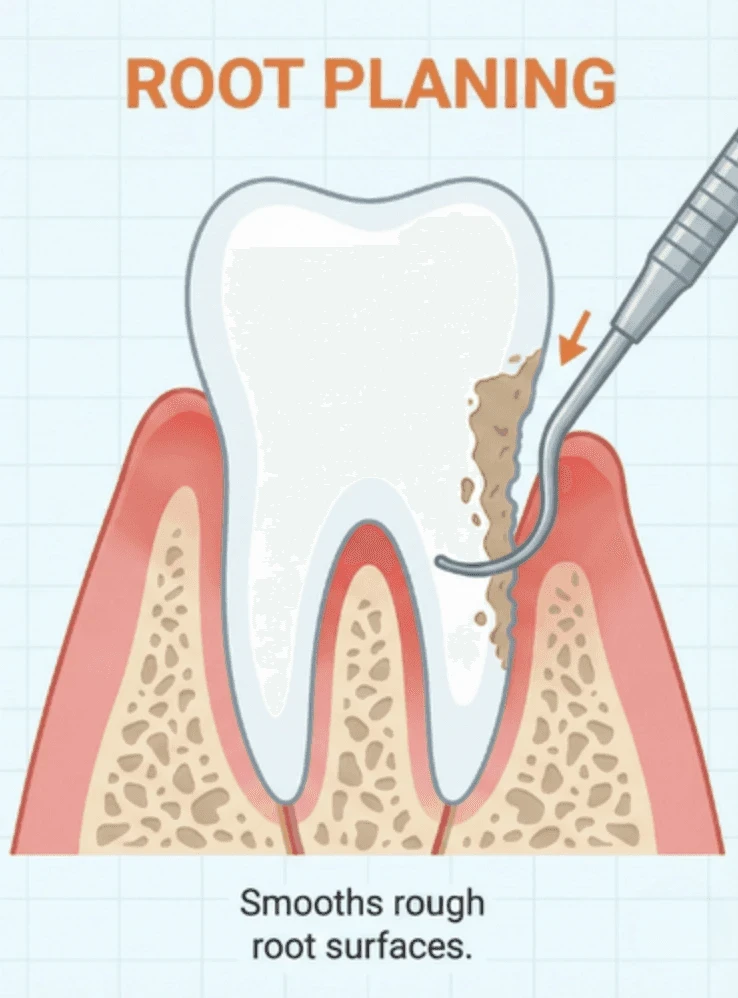
Where indicated, scaling is followed by root planing, a procedure in which the root surfaces are smoothed to remove any remaining contaminated tissue and eliminate the irregularities that allow bacteria to recolonize. Together, scaling and root planing remove the source of infection and prepare the tissue for healing and reattachment.
Step 4: Final assessment and aftercare guidance
Once treatment is complete, we perform a final clinical review to confirm that deposits have been thoroughly removed and that the treated surfaces are clean and smooth. We will assess the gum tissue and ensure the treatment has been carried out to the standard required for effective healing.
Before you leave, we will provide you with clear, detailed aftercare instructions covering what to expect during recovery, how to care for your gums at home, and any specific recommendations based on your treatment. Some tenderness and sensitivity in the days following scaling is a normal part of the healing process. A follow-up appointment will be scheduled to monitor your periodontal response and confirm that the tissue is healing as expected.

Whether it’s a regular cleaning or a more complex procedure, they always provides top-notch care in a clean, welcoming environment. I truly appreciate the attention to detail and the kind, calming approach of the entire staff. Highly recommend for anyone looking for a reliable and compassionate dental specialist!
Mini Kaul
Google Review
Your periodontal Specialists
Why choose Bloor-Yorkville Periodontics in Toronto for dental scaling?
At Bloor-Yorkville Periodontics, we understand that learning you have periodontal disease can feel daunting. We are committed to making the treatment process as informed, comfortable, and clinically effective as possible.
Specialist-level periodontal expertise: Dental scaling, particularly when performed alongside root planing, requires precise clinical judgment, appropriate treatment, and a thorough understanding of periodontal disease. Our team brings specialist-level knowledge to every case, ensuring your treatment is targeted, thorough, and appropriate for the specific stage and presentation of your gum disease.
Gentle and precise technique: We use a combination of hand instrumentation and ultrasonic technology to achieve thorough results while helping keep discomfort to a minimum. Local anaesthesia is available where needed, and we adjust our approach throughout treatment based on your comfort and clinical response.
A supportive environment: A diagnosis of gum disease can feel overwhelming, and the prospect of treatment can be a source of anxiety for many patients. Our team takes the time to explain each step of the process, answer your questions honestly, and ensure you feel supported from your initial consultation through to your follow-up monitoring appointments.
Clear communication and transparency: Every patient deserves a clear understanding of their diagnosis, their treatment options, and what the process will involve. If we identify concerns that extend beyond the scope of scaling, we will explain our findings and discuss the appropriate next steps. We encourage you to ask questions at every stage of your care.
Conveniently located in Toronto: Our practice is accessible to patients across the city, making it easier to attend both your scaling appointments and the follow-up visits that are essential to monitoring your periodontal recovery and maintaining long-term gum health.
Gum disease does not resolve on its own, and delays in treatment allow it to advance to stages that are significantly more difficult and costly to manage. If uncertainty or anxiety has prevented you from seeking care, our team in Toronto is here to help you take that step with confidence.
FAQ
Frequently asked questions about dental scaling
How can I tell if I need dental scaling?
Several signs suggest that subgingival buildup may have reached a level that needs professional scaling. These include gums that bleed during brushing or flossing, persistent redness or swelling along the gumline, chronic bad breath that does not resolve with improved oral hygiene, and gum tissue that appears to be receding or pulling away from the teeth. Any of these symptoms needs a professional evaluation. Many patients with significant buildup below the gumline experience few obvious warning signs, which is why regular periodontal assessments are important even in the absence of symptoms.
Does dental scaling hurt?
Scaling is performed with your comfort as a clinical priority. Where sensitivity is present, we administer a local anaesthetic before treatment begins to ensure the area is fully numb. Most patients experience little to no discomfort during the procedure itself. Some tenderness and sensitivity in the treated area is normal in the days following scaling, as the gum tissue begins to heal. We will provide you with clear aftercare guidance to help manage any post-treatment discomfort effectively.
How long does dental scaling take?
Treatment duration depends on the extent of tartar accumulation and the degree of periodontal involvement. A straightforward scaling appointment typically takes between 30 and 60 minutes. If significant buildup is present across multiple areas of the mouth, or if scaling is being performed alongside root planing, we may divide treatment across two or more appointments to ensure thoroughness and maintain your comfort throughout. We will give you a clear outline of the expected number of visits and appointment length during your initial assessment.
How often do I need dental scaling?
The appropriate frequency depends on your individual periodontal health. Patients with healthy gums and minimal buildup typically maintain well with a standard professional cleaning every six months. For patients with active or previously treated gum disease, more frequent scaling appointments (generally every three to four months) are often recommended to prevent recurrence and monitor the stability of the periodontal tissue over time. Our team will advise you on the interval that is most appropriate for your specific situation.
Will my gums heal after dental scaling?
By removing the bacterial deposits and calcified tartar that are causing the infection and driving inflammation, dental scaling creates the conditions necessary for the gum tissue to heal. Most patients notice a meaningful improvement within a few weeks of treatment, gum bleeding diminishes, swelling resolves, and the tissue begins to reattach more firmly to the tooth surfaces. The extent and speed of healing varies between patients and depends in part on the severity of the disease prior to treatment and the consistency of home care during recovery. Our team will monitor your healing at follow-up appointments and advise on any additional treatment if needed.

I suffer from periodontal disease. A couple of weeks ago, I had a full periodontal cleaning. I can honestly say that my teeth have never felt as good as they do now. Ever in my life. Since then, every morning and every night, when I brush my teeth, I feel like I just left the dentist - and this is because of the thorough cleaning that I had. I do have to admit that my gums were very sensitive for a week and a half post cleaning, but it was absolutely all worth it. My gums feel healthy and strong, so do my teeth, I’ve seen a decrease in bad breath and I no longer bleed when I brush my teeth or floss.
Angela Gabot
Google Review