
Dr. Theo Katsaros
Lead periodontist
Last Updated
Share
Background
What is root planing?
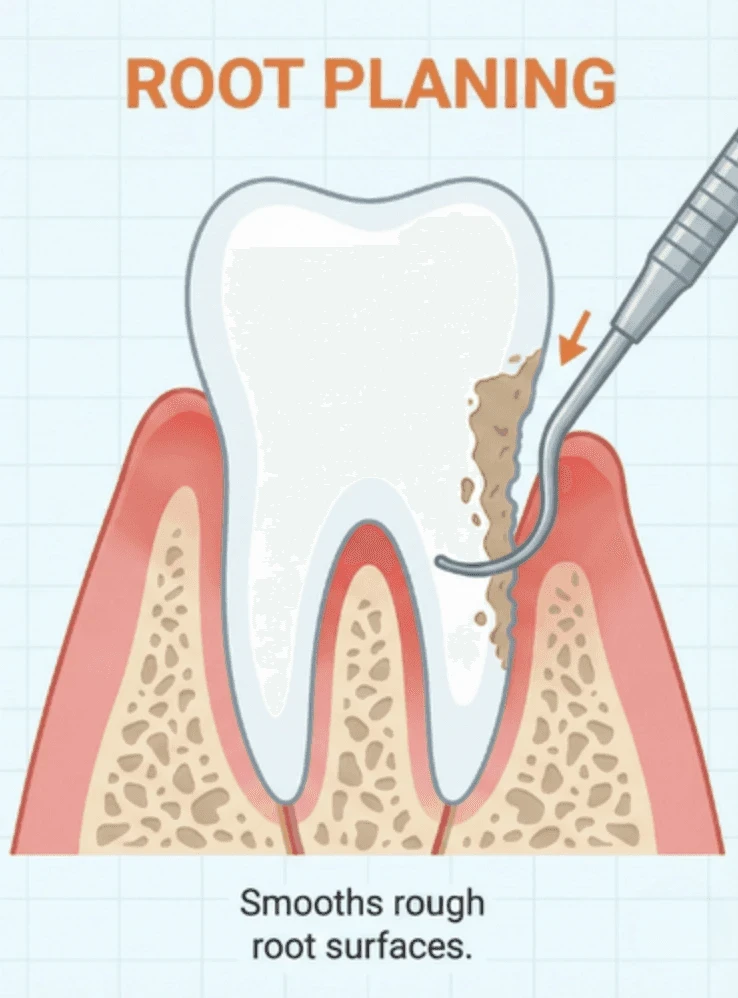
When gum disease takes hold, bacteria and tartar accumulate in the space between your teeth and gums, areas that routine brushing, flossing, and standard cleaning cannot reach. Root planing is a targeted clinical procedure designed to address this deeper level of infection. It involves carefully removing bacterial deposits and hardened tartar from the surfaces of the tooth roots below the gumline, then smoothing those root surfaces to discourage future bacterial adhesion and allow the surrounding gum tissue to heal and reattach properly.
Beyond cleaning the affected area, root planing interrupts the progression of gum disease at its source. It reduces the inflammation, bleeding, and sensitivity that characterize active periodontal infection and creates the conditions necessary for your gum tissue to stabilize and recover. Without this intervention, the disease continues to advance, leading to deepening pockets, bone loss, and ultimately, tooth loss.
At Bloor-Yorkville Periodontics in Toronto, we approach root planing with precision and care, using techniques designed to be more comfortable while achieving thorough clinical results.
When is root planing necessary?
Gum disease presents differently from patient to patient, and the decision to recommend root planing is based on a careful clinical assessment of your individual periodontal health. The most common indications include:
Active periodontitis: When gum disease has progressed beyond the early stages and bacterial infection has established itself below the gumline, root planing is typically the most effective non-surgical treatment available.
Deep periodontal pockets: Healthy gum tissue sits close to the tooth surface. When the space between the gum and tooth deepens beyond three to four millimetres, it creates an environment where bacteria thrive and standard cleaning instruments cannot reach. Root planing cleans these pockets thoroughly and encourages the gum tissue to reattach to the tooth root.
Bleeding or inflamed gums: Gums that bleed during brushing or flossing, or that appear persistently red and swollen, are often a sign that bacterial infection has extended below the gumline. Root planing addresses the underlying cause rather than the surface symptoms.
Subgingival tartar accumulation: Once tartar forms on the root surfaces beneath the gumline, it cannot be removed by brushing or flossing at home. Professional instrumentation is the only way to eliminate these deposits and halt the damage they cause to the surrounding tissue and bone.
Our specialists will conduct a thorough examination of your gums, measure periodontal pocket depths, and take X-rays where needed to build a complete picture of your periodontal health. Based on those findings, we will explain exactly what we found, why root planing may be needed, and what the treatment process will involve.
Our process
Root planing treatment process at Bloor-Yorkville Periodontics
Here is what to expect when you come in for root planing treatment:
Step 1: Examination and treatment planning
We begin with a thorough review of your dental and medical history, followed by a comprehensive clinical assessment of your gums and teeth. We measure the depth of your periodontal pockets at multiple points around each tooth and take digital X-rays where needed to evaluate the extent of tartar accumulation below the gumline and assess the condition of the underlying bone.
Once we have a complete picture of your periodontal health, we will walk you through our findings in detail, explaining what we found, what it means for your gum health, and exactly how root planing will address the problem. We encourage you to ask questions at any point.
Step 2: Anaesthesia and preparation
Before we begin, we administer a local anaesthetic so the treatment area is completely numb. Root planing involves working below the gumline, and your comfort throughout the procedure is a priority. You should not feel pain during the treatment. If at any point you feel discomfort, let us know immediately and we will address it before continuing.
Step 3: Root debridement and planing
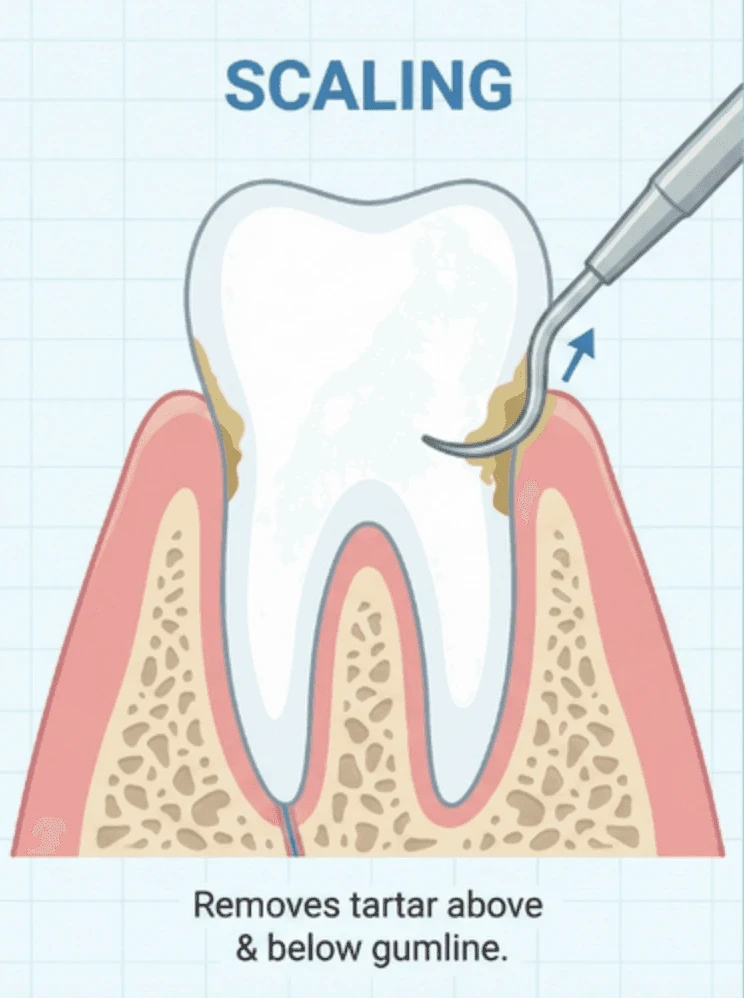
Using precision periodontal instruments, we carefully remove bacterial deposits, calculus, and tartar from the root surfaces of each affected tooth. This process, known as debridement, clears the infection that has established itself below the gumline and in the depths of the periodontal pockets.
Following debridement, we plane and smooth the root surfaces themselves. Rough or irregular root surfaces provide an environment where bacteria can recolonize quickly. Smoothing these surfaces removes that foothold, discourages future bacterial adhesion, and creates the clean, stable surface that gum tissue needs to heal and reattach to the tooth root effectively.
Step 4: Final assessment and aftercare guidance
Once the treatment is complete, we perform a final clinical check to confirm that the root surfaces are thoroughly clean and smooth and that all accessible deposits have been removed.
Before you leave, we will provide you with clear, detailed aftercare instructions. It is normal to experience some sensitivity and mild tenderness in the treated area for a few days following root planing, this is a natural part of the healing process. We will explain what to expect, what to watch for, and how to care for your gums at home to support optimal healing. A follow-up appointment will be scheduled to monitor your periodontal response and assess how well the tissue has healed.

I had two implants done as well as a cleaning out a root infection and every time I went I felt absolutely no reservations that they could get the job done and done right! Would highly recommend!
Harman Saini
Google Review
Your Periodontal Specialists
Why choose Bloor-Yorkville Periodontics in Toronto for root planing?
At Bloor-Yorkville Periodontics, we understand that root planing is a significant step in your periodontal care. We are committed to making that step as informed, comfortable, and effective as possible.
Specialist-level periodontal expertise: Root planing is not a routine procedure, it requires precise clinical judgment and technique. Our team brings specialist-level knowledge to every case, ensuring that your treatment is thorough, targeted, and appropriate for the specific stage of your gum disease.
A supportive environment: We recognize that a diagnosis of gum disease can feel overwhelming, and that the prospect of treatment can be anxiety-inducing. Our team takes the time to explain each step of the process, answer your questions honestly, and make sure you feel supported from your first consultation through to your follow-up appointments.
Conveniently located in Toronto, ON: Our practice is accessible to patients across the city, making it easier to attend both your treatment appointments and the follow-up visits that are essential to monitoring your periodontal recovery.
Clear communication and transparency: We believe every patient deserves a clear understanding of their diagnosis, their treatment options, and what to expect from the process. If we identify concerns beyond the scope of root planing, we will explain what we found and discuss the appropriate next steps. We encourage you to ask questions at every stage.
Gum disease does not resolve on its own, and delays in treatment allow it to progress to stages that are more difficult and more costly to manage. If uncertainty or anxiety has kept you from seeking care, our team in Toronto is here to help you move forward with confidence.
FAQ
Frequently asked questions about root planing
How can I tell if I need root planing?
Several clear signs suggest that gum disease may have progressed to a point where root planing is needed. These include gums that bleed during brushing or flossing, persistent redness or swelling along the gumline, chronic bad breath that does not resolve with improved oral hygiene, gum tissue that appears to be receding or pulling away from the teeth, and teeth that feel loose or have shifted position. Any one of these symptoms may require a professional evaluation. The sooner gum disease is assessed, the more treatment options are available and can create a better the long-term outcome.
Does root planing hurt?
Root planing is usually performed under local anaesthesia, which is administered before any instrumentation begins to ensure the treatment area is completely numb. Most patients experience little to no discomfort during the procedure itself. Some tenderness and sensitivity in the treated area is normal in the days following treatment, as the gum tissue begins the healing process. We will provide you with clear aftercare guidance to manage any post-treatment discomfort effectively.
How long does root planing take?
The duration of treatment depends on the extent of the disease and how much of the mouth requires treatment. When only a single quadrant or section of the mouth is being treated, appointments typically run between 45 minutes and one hour. If your entire mouth requires root planing, we will divide the treatment across two to four appointments to ensure your comfort and allow adequate time for thorough instrumentation. During your initial assessment, we will give you a clear outline of how many visits you will need and what each appointment will involve.
What should I expect after root planing?
Some degree of tenderness, sensitivity, and mild gum soreness in the days following root planing is entirely normal and is a sign that the healing process is underway. To support recovery, we recommend brushing gently with a soft-bristled toothbrush, avoiding very hot or very cold foods and beverages for the first day or two, rinsing with warm salt water to keep the area clean, and taking any medications we have recommended to manage discomfort. Most patients notice a meaningful improvement within a few days, with gum bleeding diminishing and tissue beginning to look and feel healthier as healing progresses.
Will I need root planing again in the future?
With consistent oral hygiene at home and regular professional cleanings, many patients are able to maintain stable periodontal health following root planing and do not require the procedure to be repeated. However, gum disease can recur, particularly if bacterial accumulation is not managed consistently. Regular monitoring appointments are an important part of your long-term periodontal care. They allow our team to track the health of your gum tissue, measure pocket depths over time, and intervene early if signs of recurrence appear, before the disease has the opportunity to progress again.

Five stars is inadequate when reviewing!
Clive Endersby
Google Review