
Dr. Theo Katsaros
Lead periodontist
Last Updated
Share
Background
What is gum grafting?
Gum recession occurs when the gum tissue surrounding your teeth gradually pulls back, exposing the tooth root beneath. Left untreated, this can lead to increased sensitivity, a higher risk of infection, and over time, more serious complications such as bone loss or tooth loss.
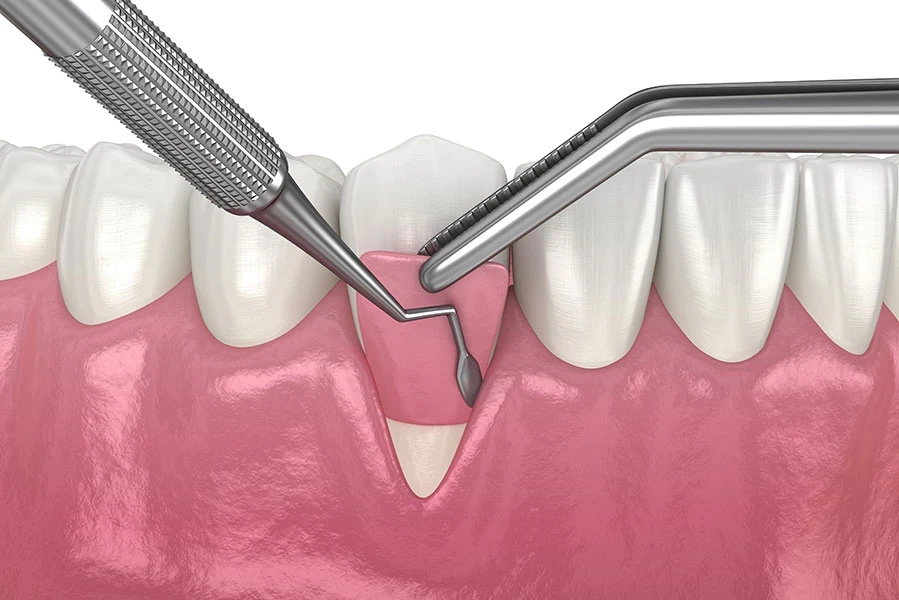
A gum graft is a procedure that restores lost gum tissue by placing a small amount of healthy tissue over the exposed root. This not only improves the appearance of your gumline, but also creates a protective barrier that shields the root from bacteria, reduces sensitivity, and helps stop recession from progressing further. The procedure can be performed on any tooth affected by recession, and the results are both functional and long-lasting. By addressing the problem early, a gum graft can protect the underlying bone, preserve the health of neighbouring teeth, and help you maintain your smile for years to come.
At Bloor-Yorkville Periodontics in Toronto, our periodontists use precise techniques and high-quality grafting materials for faster healing and lasting results, to help give your gums the foundation for long-term health.
When do you need a gum graft?
A gum graft can help fix several problems with your gums. Here are the main reasons you might need one:
Gum recession: If your gum tissue has pulled away from your teeth, the tooth roots become exposed and vulnerable. A gum graft restores coverage, protecting the root and reducing the risk of further damage.
Tooth sensitivity: Your teeth hurt when you eat or drink something hot or cold. Exposed roots are a common cause of sharp sensitivity to hot, cold, or sweet foods and drinks. By covering the root surface, a gum graft can help reduce discomfort and improve your day-to-day comfort.
Progressive recession: If your gumline continues to recede despite good oral hygiene habits, a gum graft can help stop the progression and prevent more serious complications from developing over time.
Severe gum disease: Periodontal disease can cause significant loss of gum tissue. Once the disease has been treated and stabilized, a gum graft can help restore the tissue that was lost and support the long-term health of your teeth and bone.
Thin or insufficient gum tissue: Some patients naturally have thin or inadequate gum tissue that leaves their teeth poorly protected. A gum graft builds thickness and reinforces the gumline, creating a stronger foundation.
Our specialists will check your gums carefully. Then we'll discuss with you whether a gum graft is the right treatment option for you!
Our process
Gum grafting process at Bloor-Yorkville Periodontics
Step 1: Examination and treatment planning
We'll begin by discussing your symptoms and any concerns you have about your gum health. We'll review your dental records, medical history, and any medications you're currently taking that may be relevant to your treatment. From there, we'll conduct a thorough examination of your teeth and gums to assess the extent of any recession, and take X-rays or clinical photographs where needed to gain a more complete picture.
Once we've gathered all the information we need, we'll walk you through our findings and we create a individual treatment plan tailored to you for our recommended treatment.
Step 2: Preparing for your gum graft
Your comfort throughout the procedure is a priority. Before we begin, we'll administer a local anesthetic to fully numb the treatment area.
We'll then carefully prepare the site where the graft will be placed, thoroughly cleaning the exposed tooth root before we add the new tissue.
Step 3: Placing the graft
We'll carefully position the new gum tissue over the exposed root surface. Depending on your mouth, we may take the graft tissue from the top of your mouth or another suitable area.
Next we secure the graft in place with fine sutures (stitches), which hold the tissue firmly while it heals and bonds with your existing gum tissue.
Step 4: Final review & aftercare instructions
Before you leave, we'll perform a final check to confirm the graft is correctly positioned and that everything looks as expected. Any minor adjustments will be made at this stage if needed.
We'll also provide detailed aftercare instructions so you know exactly how to care for the graft site at home and what to expect during recovery, including any temporary soreness or swelling.

I recently came for a gum grafting procedure and could not recommend it more. The staff at the office is warm, kind and welcoming. 5/5 stars and 10/10 wonderful experience!
Zoe Shanks
Google Review
Your Periodontal Specialists
Why choose Bloor-Yorkville Periodontics in Toronto for gum grafting?
At Bloor-Yorkville Periodontics, we understand that learning you need gum grafting can feel daunting. We are committed to making that process as informed, comfortable, and clinically effective as we can.
Individual treatment plans - We listen to your concerns and design a treatment plan that fits your specific needs.
Gentle & expert care - We combine specialist expertise with a gentle, caring approach so that your treatment is not only effective, but as comfortable as we can make it.
Supportive environment - Our team is here to make you feel safe, relaxed, and supported throughout the treatment and healing process.
Local convenience - Located right in Toronto we are easy to reach for all your appointments.
Gum disease does not resolve on its own, and delays in treatment allow it to advance to stages that are significantly more difficult and costly to manage. If uncertainty or anxiety has prevented you from seeking care, our team in Toronto is here to help you take that step with confidence.
FAQ
Frequently asked questions about gum grafting
Do I need a gum graft?
You might need a gum graft if you notice:
Your gums are moving away from your teeth.
Hot or cold food and drinks make your teeth hurt or sensitive.
You can see the roots of your teeth, or there are yellow or dark spots near your gums.
Your teeth seem longer than they used to be.
If any of these sound like what you're experiencing, please call us so we can take a look at your gums.
Will a gum graft hurt?
We want you to be comfortable! Most patients don’t feel any pain during the procedure. We numb your gums first with a local anethestic before the procedure.
You might feel a little sore afterward, but most people say it doesn't hurt much during the actual procedure.
How long will my gum graft last?
Your gum graft can last a very long time, sometimes for the rest of your life, if you care for your teeth and gums properly.
Here's what helps your gum graft stay strong:
Brush your teeth gently twice daily with a soft toothbrush.
Use floss at least once a day with care around your gums.
Visit the dentist for regular cleanings and dental exams at least every 6 months.
Stay away from smoking (it damages your gums)!
Important reminder: Call us right away if you feel any pain, see your gums moving back, or notice anything unusual with your gum graft. We'll check to make sure everything is healing properly.
Will my gum graft blend in with my other gums?
Yes! We take great care to make your gum graft blend in with the rest of your gums. Once everything is healed, it usually looks so natural that no one will notice you had the procedure.

I was a patient that had very low chances for a successful gum graft because of how bad the gum recession was. I had a previous dentist tell me that it would not work and refused to do the procedure which is when I was referred to Dr. Caudry. Dr. Caudry was able to successfully do the gum graft and now I have a smile I am very happy with. Thank you for giving me my smile back!
Tricia Peatling
Google Review