
Dr. Theo Katsaros
Lead periodontist
Last Updated
Share
Background
What is pocket reduction surgery?
Pocket reduction surgery, also known as osseous surgery or flap surgery, is a periodontal procedure designed to eliminate the deep spaces that form between your gums and teeth when gum disease has advanced beyond what non-surgical treatment can address.
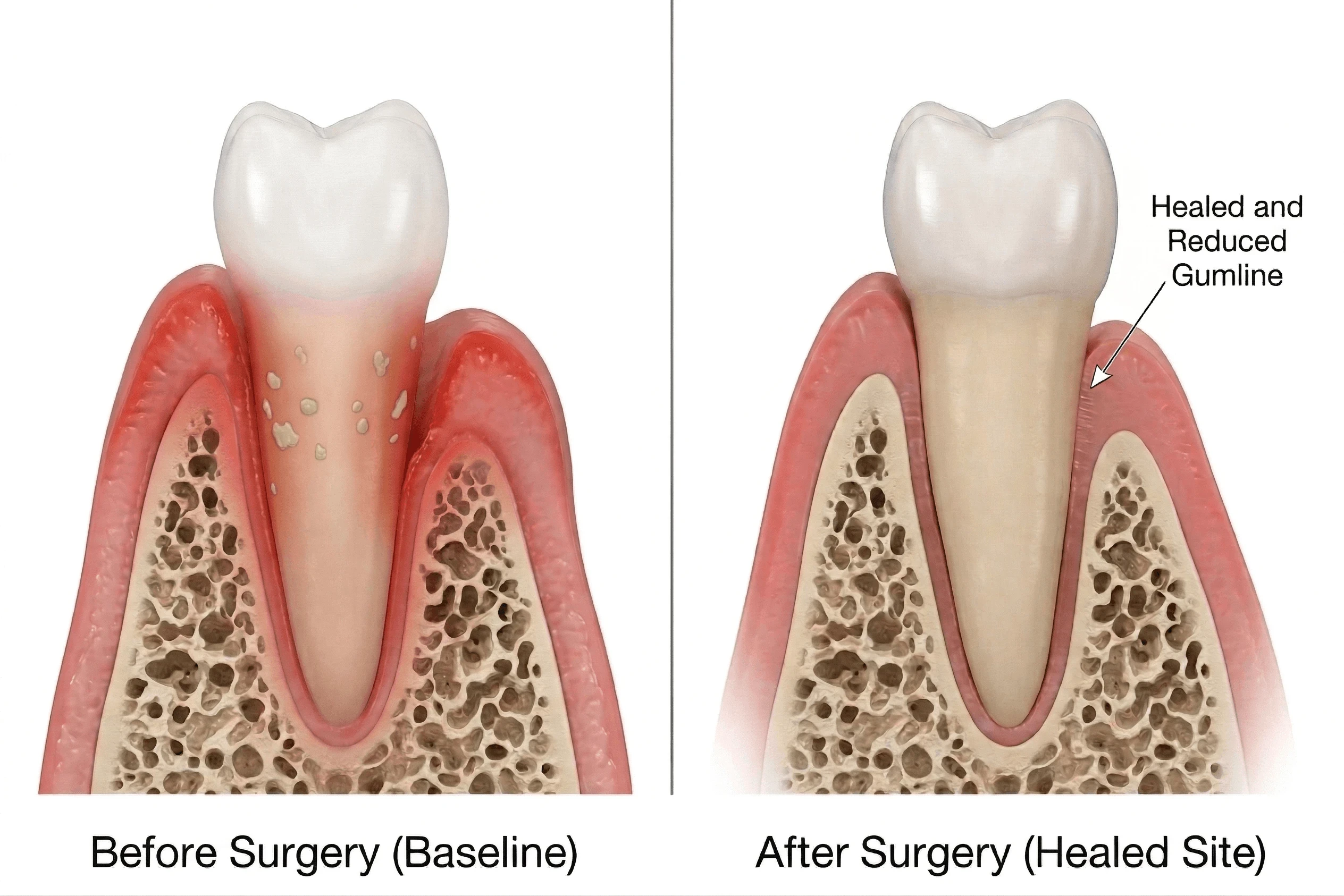
Healthy gums sit snugly against the tooth surface, with a shallow sulcus of one to three millimetres that is easy to keep clean with regular brushing and flossing. When gum disease takes hold, the tissue pulls away from the tooth and deeper pockets form. These pockets, which can reach six millimetres or more in advanced cases, become reservoirs for bacteria, plaque, and tartar that cannot be reached by a toothbrush or even by professional cleaning instruments without surgical access.
Left untreated, the bacteria in these pockets continue to attack the surrounding bone and tissue, leading to progressive bone loss, loose teeth, and eventually tooth loss. Pocket reduction surgery gives your periodontist direct access to the root surfaces and underlying bone, allowing thorough cleaning and reshaping so that the gum tissue can be repositioned closely against the tooth, reducing pocket depth and eliminating the conditions that allow disease to persist.
Who needs pocket reduction surgery?
Pocket reduction surgery may be recommended if:
Non-surgical treatment has not been sufficient to bring your gum disease under control, and deep pockets remain after scaling and root planing.
Your periodontal pockets measure five millimetres or more, making it impossible to clean the root surfaces and remove bacterial deposits without surgical access.
Bone loss is evident on X-rays and the underlying bone contour needs to be reshaped to eliminate the irregular surfaces where bacteria accumulate.
Your gum disease is classified as moderate to severe, and conservative treatment alone is unlikely to stop its progression.
You are at risk of tooth loss if the bone and tissue destruction around one or more teeth is not addressed promptly.
Not every patient with gum disease will require surgery. We take a conservative approach and only recommend pocket reduction surgery when non-surgical options have been exhausted or when the extent of the disease makes surgery the clearly appropriate course of action.
Our process
Pocket reduction surgery process at Bloor-Yorkville Periodontics
Step 1: Examination and treatment planning
We begin with a comprehensive periodontal assessment, including a full review of your dental and medical history and a careful examination of your gum tissue. We measure the depth of every pocket around each tooth, assess the extent of bone loss using digital X-rays, and evaluate which areas require surgical treatment.
We will walk you through our findings in detail, explain why surgery is being recommended over continued non-surgical management, and outline what your procedure will involve, including how many areas will be treated and what your recovery is likely to look like.
Step 2: Preparing for your procedure
Before we begin, we administer a local anesthetic to fully numb the treatment area so you remain comfortable throughout the procedure. You may be aware of some pressure during the surgery, but the area will be completely numb and you should not feel pain at any point.
For patients who feel anxious or whose procedure is more extensive, IV sedation is available and may be recommended to help you stay relaxed and allow our team to work with the precision your treatment requires.
Step 3: Accessing the root surfaces
Your periodontist makes small, carefully placed incisions in the gum tissue and gently folds it back to create a flap. This gives direct access to the root surfaces of your teeth and the underlying bone, which cannot be reached through non-surgical cleaning alone.
This access is what makes pocket reduction surgery so effective. With the gum tissue folded back, your periodontist can see and reach every surface that needs to be cleaned, including areas deep below the gum line where bacteria have been accumulating.
Step 4: Cleaning and reshaping
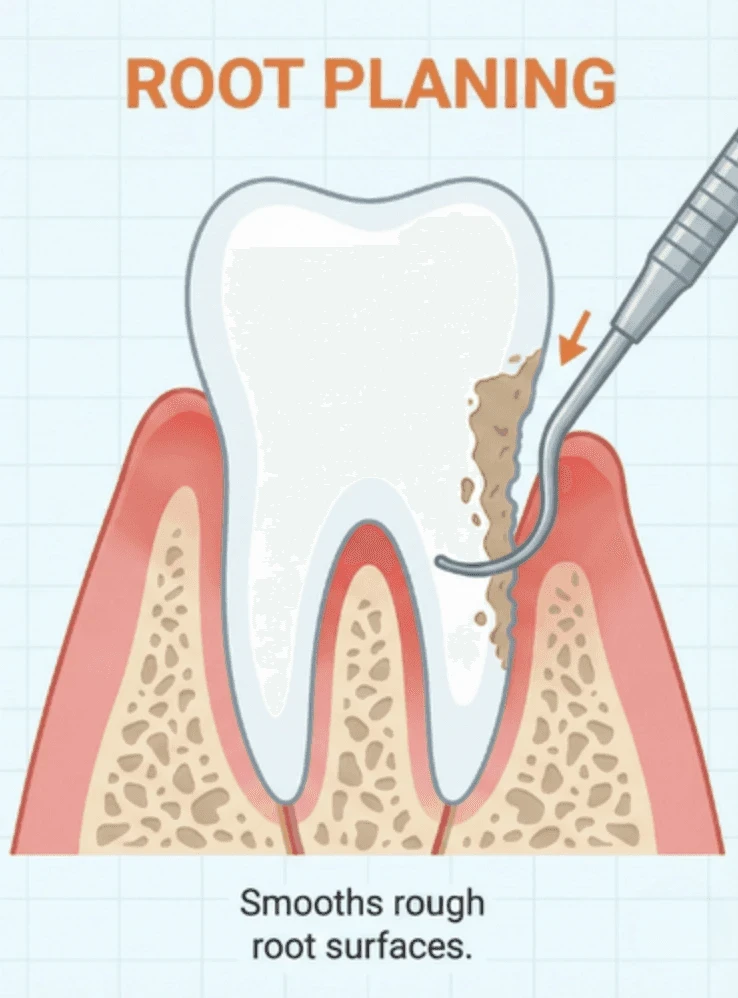
With full visibility and access, your periodontist thoroughly removes all bacterial deposits, plaque, and tartar from the root surfaces. Any rough or irregular surfaces on the roots are smoothed to make it harder for bacteria to reattach in the future.
Where the underlying bone has been damaged or reshaped by disease into contours that harbour bacteria, your periodontist may reshape the bone as well. This process, known as osseous recontouring, eliminates the uneven surfaces and creates an environment that is easier to keep clean going forward.
Step 5: Closing and repositioning the gum tissue
Once cleaning and reshaping are complete, the gum tissue is repositioned closely against the tooth and sutured carefully into place. The goal is to significantly reduce pocket depth so that the sulcus around each treated tooth falls within a range that you and your hygienist can keep clean with regular maintenance.
Reducing pocket depth is the central objective of the procedure. Shallower pockets mean less opportunity for bacteria to accumulate, which breaks the cycle of ongoing bone and tissue destruction.
Step 6: Aftercare and recovery guidance
Before you leave, we will give you thorough aftercare instructions covering what to expect in the days following your procedure, how to manage any swelling or discomfort, dietary recommendations during healing, oral hygiene guidance for the treated areas, and what to watch for that would prompt you to contact us. Our team is available throughout your recovery to answer any questions.

I was referred for a periodontal consultation before I started some ortho work. I’m very glad I went there. The office is also conveniently located on the subway line (I travelled from Scarborough). If you need a periodontist or implant, you will be in very good hands.
Jocelyn Racine-Carreon
Google Review
Your Periodontal Specialists
Why choose Bloor-Yorkville Periodontics in Toronto, for pocket reduction surgery?
At Bloor-Yorkville Periodontics, we understand that learning you need pocket reduction surgery can feel daunting. We are committed to making that process as informed, comfortable, and clinically effective as we can.
Periodontal specialist expertise - Pocket reduction surgery is a core periodontal procedure. Our periodontists have the specialist training and clinical experience to manage both straightforward and complex cases, including those involving significant bone loss or multiple affected areas.
Conservative treatment philosophy - We do not recommend surgery unless it is genuinely necessary. If non-surgical treatment can adequately manage your gum disease, that is always our first approach. Surgery is recommended only when the clinical evidence clearly supports it.
Sedation available - For more extensive procedures or patients who experience anxiety, IV sedation is available to ensure your comfort and allow our team to work with the level of care your treatment demands.
Long-term periodontal management - Gum disease requires ongoing monitoring and maintenance after surgery. As a specialist periodontal practice, we provide the structured follow-up care that protects your results and helps prevent recurrence.
Conveniently located in Toronto - Our practice is easy to reach for your procedure, your suture removal appointment, and the periodontal maintenance visits that follow.
Gum disease does not resolve on its own, and delays in treatment allow it to advance to stages that are significantly more difficult and costly to manage. If uncertainty or anxiety has prevented you from seeking care, our team in Toronto is here to help you take that step with confidence.
FAQ
Frequently asked questions about pocket reduction surgery
How is pocket reduction surgery different from scaling and root planing?
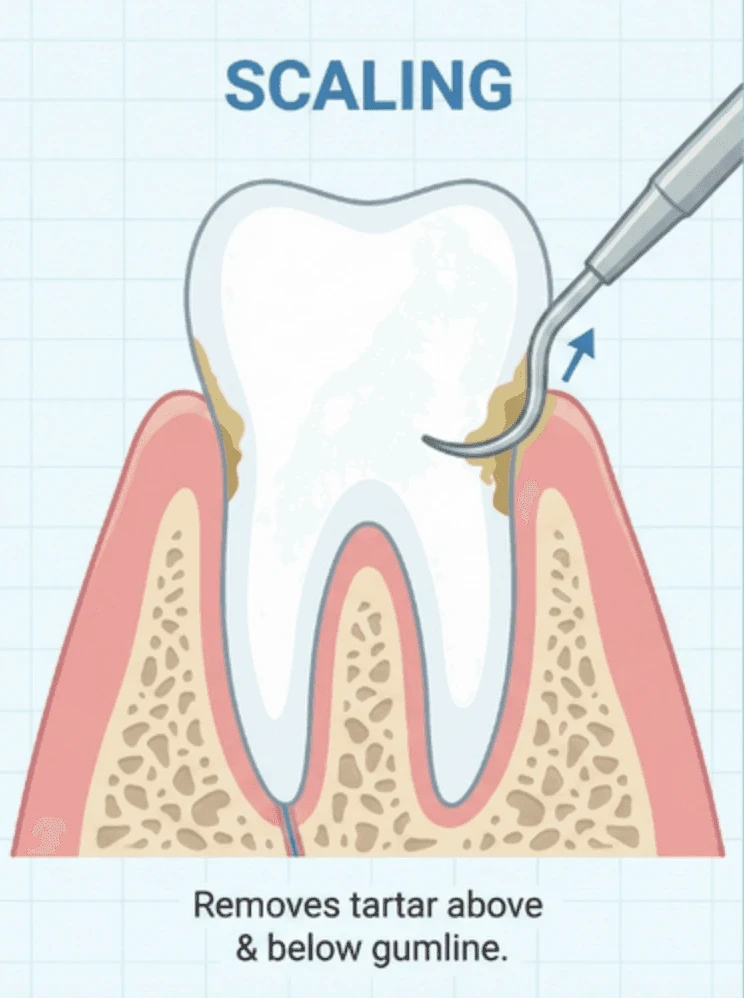
Dental scaling and root planing is a non-surgical deep cleaning procedure that removes plaque and tartar from below the gum line using specialized instruments. It is typically the first line of treatment for gum disease and is effective for many patients. Pocket reduction surgery is recommended when scaling and root planing has not been sufficient to bring pocket depths under control, or when pockets are deep enough that the root surfaces and bone cannot be adequately cleaned without surgical access. The two procedures are often sequential steps in a broader treatment plan rather than competing alternatives.
Is pocket reduction surgery painful?
The procedure is performed under local anesthetic, so the treatment area is fully numb before we begin. You should not feel pain during the surgery, though some pressure is normal. After your procedure, some swelling, tenderness, and mild discomfort are expected for the first few days. We will give you clear instructions on managing your recovery, including recommendations for pain relief, dietary adjustments, and oral hygiene during the healing period.
How long does it take to recover from pocket reduction surgery?
Most patients are comfortable returning to light daily activities within a day or two of their procedure. The gum tissue typically heals over the first two to four weeks, though complete tissue maturation takes longer. We will schedule a follow-up appointment to remove sutures and assess your healing, and we will keep you informed of what to expect at each stage. Avoiding strenuous activity, smoking, and certain foods in the initial recovery period all support a smoother healing process.
Will I need more than one surgical appointment?
In some cases, particularly when gum disease affects multiple areas of the mouth, treatment may be divided into separate appointments to manage each area in a controlled and comfortable way. We will discuss the full scope of your treatment at your planning appointment so you know exactly how many visits your care will require before we begin.
What happens after pocket reduction surgery?
Following surgery and the initial healing period, you will transition into a periodontal maintenance program. This typically involves more frequent professional cleaning appointments than a standard dental recall, usually every three to four months, to monitor pocket depths, keep root surfaces clean, and catch any early signs of recurrence. Maintaining this schedule is one of the most important things you can do to help protect the results of your surgery and prevent gum disease from progressing further.

When I came here the first time I had been feeling utterly hopeless about my teeth, but everyone there is so kind and I felt completely taken care of. If you have gums issues, this is where you need to go!
Em Ross
Google Review