
Dr. Theo Katsaros
Lead periodontist
Last Updated
Share
Background
What is bone grafting?
Bone grafting is a surgical procedure that rebuilds or reinforces bone in the jaw where it has been lost or damaged. The goal is to restore enough bone volume and density to support dental implants, protect neighbouring teeth, and preserve the overall structure of your jaw.
Bone loss in the jaw is more common than most people realize. It can occur gradually after tooth loss, as a result of gum disease, following a tooth extraction, or due to injury or infection. Once bone is lost, the process continues unless it is addressed, which is why timing matters.
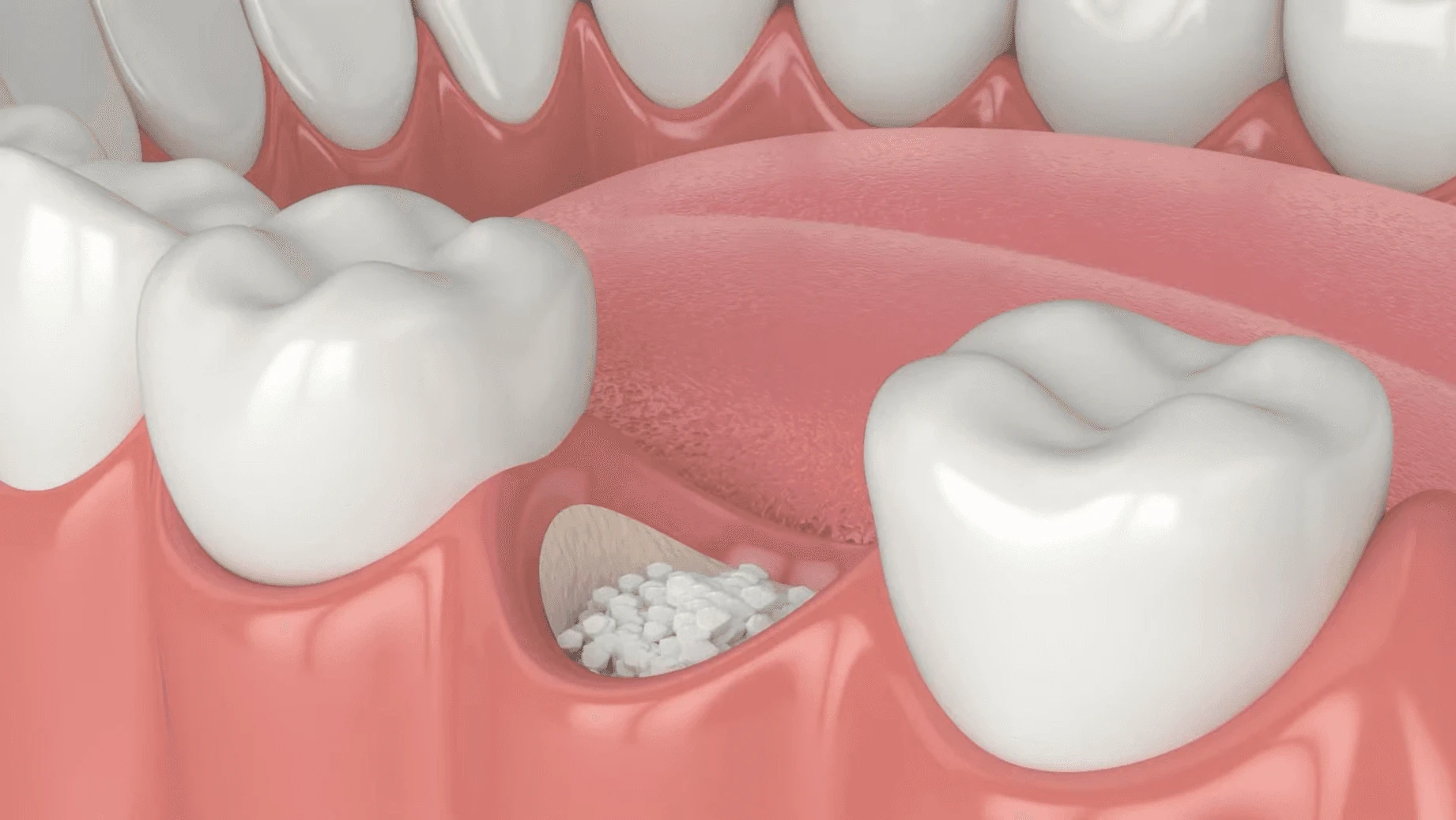
During a bone graft, biocompatible grafting material is placed in the area where bone is deficient. This material acts as a scaffold, encouraging your body to grow new bone into the space over time. Depending on the extent of the grafting needed and your individual healing, new bone can mature over a period of several months, after which implant placement or other restorative treatment can proceed.
When is bone grafting needed?
Bone grafting may be recommended as part of your treatment plan if:
You are planning dental implants but do not have sufficient bone density or volume to support them without preparation.
You have had a tooth extracted and the socket needs to be preserved to prevent bone loss in the area.
Gum disease has caused bone loss around one or more teeth, and that bone needs to be rebuilt to stabilize the teeth and restore the surrounding structures.
Bone loss has progressed to the point where neighbouring teeth are at risk of becoming loose or shifting out of position.
You are preparing for a sinus lift or other advanced implant procedure that requires a solid bone foundation beforehand.
Not every patient with bone loss will require a bone graft. We will assess your situation carefully and only recommend grafting when it is genuinely necessary to achieve a safe and lasting outcome.
Types of bone grafts
There are several types of bone grafting material, and the most appropriate choice depends on the location, extent of bone loss, and your overall health. We will explain the options that apply to your situation during your consultation.
Socket preservation grafts are placed immediately after a tooth extraction to fill the empty socket and prevent the bone from collapsing inward. This is one of the most common types of graft and is often recommended when implants are planned for the future.
Ridge augmentation grafts rebuild the natural contour of the jawbone where significant bone loss has occurred, typically due to tooth loss or long-term missing teeth. This restores the ridge to a shape and volume that can support an implant.
Periodontal bone grafts are used to regenerate bone that has been destroyed by gum disease around the roots of existing teeth. This can help stabilize teeth that might otherwise be lost.
Block bone grafts involve taking a small section of bone, usually from another site in your mouth, and securing it to the deficient area. These are used when a larger volume of bone needs to be rebuilt.
Our process
Bone grafting process at Bloor-Yorkville Periodontics
Every bone grafting procedure is planned and carried out with careful attention to your individual anatomy and treatment goals. Here is what the process typically looks like.
Step 1: Examination and treatment planning
We begin with a comprehensive review of your dental and medical history, including any medications you are taking that could affect healing. Digital X-rays and, where needed, cone beam imaging give us a detailed picture of your bone structure, identifying exactly where the deficiency is and how much rebuilding is required.
We will then walk you through our findings and explain clearly why a bone graft is being recommended, what type of graft is most appropriate for your situation, and what your treatment timeline will look like from grafting through to your final restoration.
Step 2: Preparing for your procedure
Your comfort is our priority. Before we begin, we will administer a local anesthetic to fully numb the treatment area. For patients who are anxious or whose procedure is more involved, IV sedation is also available and may be recommended depending on the extent of the graft.
Once you are comfortable, we prepare the site carefully, ensuring the area is clean and ready to receive the grafting material.
Step 3: Placing the graft
We make a small incision in the gum tissue to access the underlying bone. The grafting material is then placed precisely into the deficient area and shaped to restore the natural contour of the jaw.
In some cases, a resorbable membrane is placed over the graft to protect the site and guide new bone growth. The gum tissue is then carefully closed and sutured to allow healing to begin.
Step 4: Healing and bone maturation
This is the stage that requires the most patience. Over the following months, your body gradually replaces the grafting material with new bone tissue. The timeline varies depending on the size and type of graft, but most sites require three to nine months of healing before the bone is mature enough to support implant placement or other restorative work.
We will schedule follow-up appointments during this period to monitor your healing and confirm through imaging that the graft is integrating as expected.
Step 5: Proceeding with your restorative treatment
Once your new bone has fully matured, you will be ready to move forward with the next stage of your treatment, whether that is dental implant placement, a sinus lift, or another restorative procedure. We will coordinate that transition and ensure you have a clear picture of every step ahead.
Step 6: Aftercare and recovery guidance
Before you leave after your grafting procedure, we will give you detailed aftercare instructions covering what to expect in the days that follow, how to manage swelling and discomfort, dietary recommendations during healing, and what signs to watch for that would warrant a call to our office. Our team is available to support you throughout your recovery.

I had been experiencing severe molar pain for months. I needed an extraction and bone graft. The procedure itself was so quick and painless. I have a few friends who have had the same procedure and they were astonished at how well I was feeling after surgery.
Liz Anderson
Google Review
Your Periodontal Specialists
Why choose Bloor-Yorkville Periodontics in Toronto for bone grafting?
At Bloor-Yorkville Periodontics, we understand that learning you need bone grafting can feel daunting. We are committed to making that process as informed, comfortable, and clinically effective as possible.
Periodontal specialist expertise - Bone grafting is a core part of periodontal practice. Our periodontists have the training and clinical experience to manage both straightforward and complex grafting cases with precision.
Comprehensive treatment planning - We look at your full oral health picture before recommending any grafting procedure, so you only undergo treatment that is genuinely necessary and well-suited to your goals.
Sedation available - For more involved procedures, IV sedation is available to ensure you are comfortable and that our team can work with the level of care your treatment requires.
Continuity of care - From your initial assessment through grafting, healing, and eventual implant or restorative treatment, you are cared for by the same specialist team throughout.
Conveniently located in Toronto - Our practice is easy to reach for all your appointments, including the follow-up visits that are an important part of monitoring your healing.
Gum disease does not resolve on its own, and delays in treatment allow it to advance to stages that are significantly more difficult and costly to manage. If uncertainty or anxiety has prevented you from seeking care, our team in Toronto is here to help you take that step with confidence.
FAQ
Frequently asked questions about bone grafting
Why do I need a bone graft before dental implants?
Dental implants are anchored directly into the jawbone, so there needs to be enough bone present to hold them securely. When bone has been lost due to tooth extraction, gum disease, or the natural changes that follow tooth loss, there may not be sufficient volume or density for an implant to integrate properly. A bone graft rebuilds that foundation so your implant has the best possible chance of lasting for many years.
Is bone grafting painful?
The procedure itself is performed under local anesthetic, so you should not feel pain while it is taking place. Some swelling, tenderness, and mild discomfort in the days following your graft are normal, and we will give you clear instructions on how to manage your recovery comfortably. Most patients find the experience more straightforward than they expected.
How long does it take for a bone graft to heal?
Healing time depends on the size and location of the graft. Most sites take between three and nine months to mature fully before they can support implant placement. We will give you a realistic timeline estimate based on your specific case at your consultation and keep you updated throughout your healing with follow-up imaging.
Where does the grafting material come from?
There are several sources of bone grafting material. In some cases, a small amount of bone is taken from another site in your own mouth. In others, we use processed bone from a tissue bank, which has been sterilized and prepared to be safe and biocompatible. Synthetic grafting materials are also available. We will discuss the most appropriate option for your situation and explain the reasoning behind our recommendation.
Can I go back to normal activities after a bone graft?
Most patients can return to light daily activities within a day or two of their procedure. We recommend avoiding strenuous exercise, smoking, and certain foods during the initial healing period. We will give you specific guidance tailored to your procedure so you know exactly what to expect and how to give your graft the best conditions for successful healing.

I had a great experience receiving my dental implant surgery from Dr. Caudry. She took the time to explain the procedure and timeline and whether bone grafting was required. She was also upfront about the cost of the entire procedure from the beginning which is appreciated on my end. When it was time for the implant surgery, she was very precise and efficient and made sure I didn’t experience any discomfort. The office staff was also great at responding promptly to any questions I had. I would definitely recommend Dr. Caudry and her office for any dental implant procedures. Thanks!
Steven Ma
Google Review